Where’s Spring?

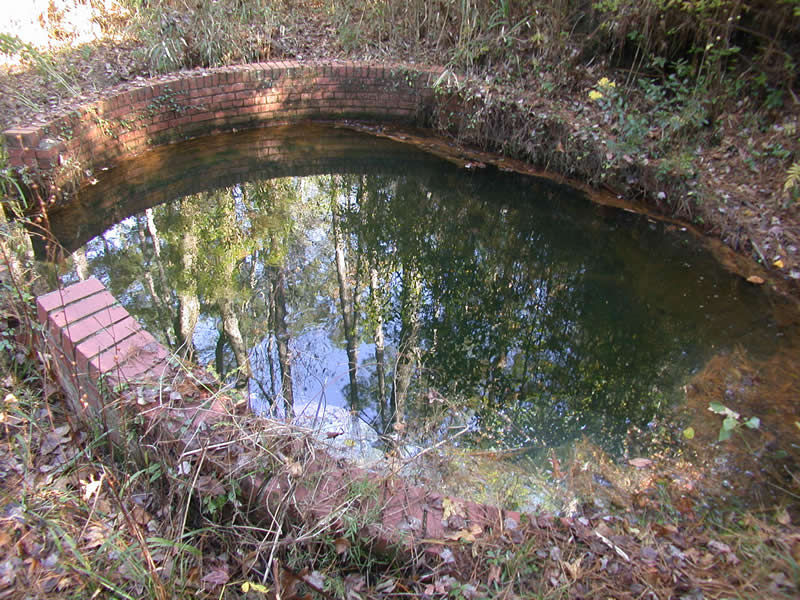
This photo doesn’t have much to do with the title directly, but I thought it looked like a giant eye gazing at the trees above, searching for the first hints of leaves to appear.

Every day I check The Weather Channel’s 10-day forecast online, and every day it says in a few more days it will be warmer. But it seems impossible to catch up to those avowed days. They perpetually remain the hope of impending warmth, instead of warmth itself. On the rare day that does see a hint of springtime, winter is always right behind, ready to reclaim its territory.

Saturday was nearly sixty. Then, the wind picked up and the temperatures plummeted. This morning it was seventeen degrees in my car. I checked the forecast and not only will it be cold tomorrow, but they’re promising 2-4 inches of snow! That’s just crazy talk for the eastern shore. We see two types of precipitation here: rain and fog. Snow is the Bigfoot of the eastern shore — an elusive myth that’s talked about, but rarely documented.

Those warm days are apparently still a promise, but I now have to wait until early next week to have them. And I don’t want to. My fingers are hovering over the thermostat control, twitching above the windowsill, dying to fling it up and let in some fresh air. The plants in my narrow strip of a yard are feeling the urge, too; neon green buds hang uncertainly from their tips as if wondering if they’d made a bad choice in showing up early for the party.

I feel like Mother Nature is dragging me along through the last gasps of winter by dangling in front of me this promise of things to come. And I — like a good little donkey — keep trotting behind, eyes fixed on the prize.


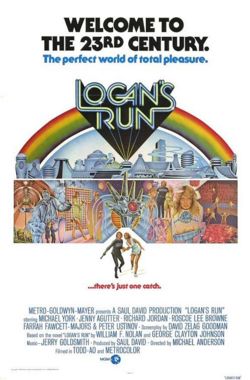
Running with Logan

Age. Why is it such an important issue? Or rather, why is youth?

I don’t feel like I’m getting ‘old’. I don’t really think I look it, but lately the slew of advertisements and movies starring people born in the eighties, and (gasp) even the nineties is striving to prove me wrong. Everywhere I look, teen appeal is pounding into my brain the fact that youth has somehow crept away from me in the night as I slept, and I’m well over the age where hippies of old insisted I could no longer be trusted.

As I blame society and The System for most things, I think I’ll stick to my usual for this as well. Someone, somewhere along the line said, “Youth is where it’s at.” And everyone followed. True, there can be arguments made about evolution and the drive to reproduce with the youngest, and thereby most virile, of the species. Yet, I can’t hold our base nature responsible for the total disregard our society has for those who’ve crested the ripe old age of twenty-five.

Young people are dumb. It’s not their fault. They just have no experience. They run out in the world thinking they know everything, and find out they know nothing. I know; I’ve done it myself. Even though I’m lamenting my fate as an initiate of the wrinkled set, I really don’t know how far back into my youth I would go to reclaim that former idyllic visage. Being young was the hardest thing I had to do. So why am I in such a huff about its demise? And why, when most people recognize this fact, is youth so revered?

I think it’s all about ideal. An unlined face. A supple body. A muscle-to-fat ratio that isn’t tipped crazily in the wrong direction. It doesn’t matter what’s under the hood, as long as the looks are there. Take Anna Nicole Smith (I know, we’re all sick of hearing about her, but she’s a prime example, so bear with me). Anna was dumb as a bag of bricks. But, she was beautiful. She graced the cover of Playboy and became a Guess model (something, I’ve heard, that’s difficult to do). Her beauty outweighed her lack of mental ability. Whatever she did, whatever she may, or may not have injected into her system, she was beauty incarnate — and all was good. Then, age began to creep up. That bright red lipstick only served to coarsen her tanned, slightly weathered face. Her mouth sagged just a bit. Even thin again, she wasn’t the Anna she used to be. She was ‘old’ and her looks no longer buffered her from those who sought to exploit her deficits. She became the media’s clown. That’s my theory, anyway.

Unfortunately, I’m not immune to this societal disease. I’ve made Resonance twenty-three (of course, if I were to make her any older the fact that she still lives with her mother would start to veer away from irritating and dive straight into creepy). Still, I could have made Quinn much older. Instead, he’s twenty-five — shouldering just enough years to appear mature without having him suffer the burden of all those gross wrinkles. The characters in my next book are also young (physically, at least). Why? Why am I feeding into this misconception that those who’ve reached over a quarter of a century are nose-diving into the grave? Maybe because I know what sells, and, in the end, I’m still society’s bitch, whether I want to be or not.

I do admire the fantasy writers who’ve broken free of this chokehold. Kelley Armstrong has Paige, a thirty-something witch with a few extra pounds gracing her frame. A. Lee Martinez’s Duke the Werewolf and Earl the vampire were well into their middle years when made immortal. Even Laurell Hamilton’s Anita Blake storms through her thirties with way more vigor than I can muster.

Maybe this is all a bout of hypersensitivity because the face I see in the mirror is no longer the one I remember. Up to a point, every year brought positive changes — the chubby cheeks and the diminutive features morphed into a larger head, more defined jaw line and adult-sized bits and pieces. Then, the changes seemed to stop. For a few years it appeared that time had indeed ceased to march on and I would remain in that state forever. I was fooled. Robbed. The first lines began to appear at the edges of my eyes. The creases of my mouth sagged a little more. And I realized that time was nowhere near finished wreaking its havoc on my face.

Even more disheartening is the never-ending parade of youth marching behind me. For a while I could pretend we were the same age — almost. Now, though, there’s no getting around the fact I’m no longer carded in most establishments. Luckily, I’m in a profession where my brain is more important than my appearance. And, when it comes time for that headshot, well, I’ll be happy that some time-reversing prodigies invented filtered lighting and Photoshop.

"Are you bothered by smoke from someone else’s cigarette or cigar?"


When I was a kid, everyone smoked. I’m young enough not to recall people smoking in movie theaters or supermarkets, but I do remember the tall canisters at the entrance to every department store — those alluring mini-sandboxes my mom would always utilize, but never let me play in.

Back then, ashtrays were art. The best were glass and had a matching tabletop lighter, so all of ones’ friends could light up in style. The coffee table ashtrays were made for the cigarette to casually rest, perfectly balanced within one of the deep, wide V’s ringing it. The cheap plastic ones (more often seen about my house because of the convenient portability) had those narrow channels my mom would — on the rarest of occasions — be forced to crumple and bend her cigarette into. It would tightly hold the burning remains hostage while she attended some urgent matter (usually involving me, and yelling). More often than not, though, those little depressions remained unmarred. I never saw a party where a cluster of my parents’ friends gathered around the ashtray, propping their individual vices in the slots provided. Instead, they clutched them (in all the various styles that gave a spark of individuality to a common habit), or swung them about as they spoke, or forced them to share space in their hand with a drink.

It seems to me smokers like to be close to their smoke. Never once did I see my grandmother put hers down. Not even for a photo. Throughout our family album, she’s there in her chair, one leg slung over the other, right elbow on the armrest. Her hand is lifted casually to the sky, cigarette nestled between her fingers like a miniature, glowing extension of her very being.

All of this reminiscing brings me back to the main inspiration for this bit of fluff — the Smokeless Ashtray by Ronco. For those who are too young to know of this invention, it was the Yuletide equivalent of the Chia Pet — marketed heavily once Santa made his way along the Macy’s parade route, only to disappear from television ads the minute the Ball fell in Times Square. The Smokeless Ashtray’s intended purpose is clear in its title; a canister positioned over an ashtray that sucked the smoke up into itself, purportedly relieving everyone else in the room from the negative effects. But, unless the smoker stored his cigarette in the ashtray after each puff (which — by my grand, worldwide observations noted above — is doubtful), it couldn’t have possibly done much to stop a roomful of people from suffering from the effects of someone’s smoke.

Obviously, the most smoke escapes when a smoker exhales. The rest of the time, it’s just a tiny little chimney sending curls of smoke straight up into the air. In order for the smokeless ashtray theory to be properly implemented, the smoke would have to be curtailed when it’s being put out at the highest volume. And here is where a brilliant idea is born — The Smoker’s Helmet. An umbrella-like creation affixed to the head of the smoker that would pull up the exhaled smoke, sucking it into the top of the helmet where it would be disposed of via the Smokeless Ashtray method.

If people could be convinced the Smoker’s Helmet was fashionable, the glorious heyday of my youth could be restored. There would be smoking in the malls, in bars and in restaurants. Moviegoers could again enjoy lighting up in a theater (although there would have to be a Smoker’s Helmet section, because sitting behind one would be like sitting behind Darth Vader). The decorative ashtray could return from its exile and once again grace coffee tables everywhere. And I might just get a chance to play in that sandbox, after all.

http://www.ifilm.com/efp

************

Many thanks to Squeaks for making me laugh hard enough to want to write about the Smoker’s Helmet.


"To Sleep, Perchance to Dream…"


My mortal coil is a Slinky. It starts at my feet and winds up and up, so tightly wrapped around me that it would take a great deal of doing to shuffle it off. It’s not that I fear the state of death, or what lies beyond, because when I reach that point it will no longer matter. The afterlife will do what it wills — be it roasting my sinning butt in an eternal all-you-can-eat Avery barbeque, or allowing me to pass into floaty happiness as a tiny part of the greater One. And even if there is no sense beyond that which the living body provides, it still won’t matter to me once I’m dead. After all, the insensate form has no means by which to mourn itself. No, I worry more about the single second right before all goes blank (or all is revealed) when I’ll recognize that one moment as the last for me — at least the last as I currently recognize moments.

I’ve been plagued the entirety of my adult life with what I call my Hamlet complex; my considerable concern with becoming whatever it is I will become in the end. Equaling this is my concern for being myself until the end of time.

I guess what I’m saying is, I fear eternity.

The idea of never-ending sameness strikes a chord of horror within me. As much as I don’t relish the idea of being dead forever, I sure as hell don’t want to be alive forever. If I had the choice, I think I’d prefer to be dead a while, then wake up and live a while, going back and forth in that manner until time itself passes into oblivion. I’ve considered the hope of reincarnation, but the thought of not recalling who I am at this very moment bothers me (then again, if I’ve already reincarnated into this particular life, the process hasn’t done much to me in the way of trauma). I suppose it all goes back to that instant when I die. At that moment, when I’m still Avery, I suspect relinquishing my memories to become another person entirely would be an unwelcome idea. But, once I’d crossed over (or up, or down, or whatever direction I’m to take) it might not seem like such a bad deal.

These issues — as with countless writers before me — have wound their way into my book, snaking around the storyline much as my mortal Slinky coil has encompassed me. I’ve flung death onto pages of text, infusing this novel with themes of mortality and resurrection. Mirroring my trepidation of a future without change, Resonance spends some time in a version of the Norse Hel, a icy wasteland that stretches without variation into eternity. My necromancers speak of a cycle of life, death and rebirth — but also with options for those who choose not to inhabit a living shell again. There’s no punishment or consequence, only personal choice. The dead are allowed to select how they want their afterlife to play out. They’re given back their freewill — something ultimately taken from them at birth when they were not consulted about the matter of their eventual demise. And so, I’ve gone on, attempting to placate myself with my own fancies, soothing my inner uncertainties within my characters’ spirituality.

Has this exercise in self-trickery lessened my Hamlet complex? Not really. But, at least I’ve made some use of useless qualms. We writers are lucky; we have the will and ability to forge entire worlds of our own choosing. We can create people, and then pass onto them the hopes we don’t dare hold for ourselves. We are granted the range to give vent to our frustrations and fears, and then to conceal them all under the pretty guise of art. Do you know what the best part is? It’s cheaper than therapy.

******************
6:47pm

I was given a link to this video by my friend X, who is, as always, ever sensitive to my fits of despair:


How much is enough?


Can we trick our readers into thinking they’re in a place that we ourselves have never been? Can we fool them enough to make them believe our characters actually dwell where we say they do? How important is it for us to put ourselves wholly into their shoes before setting fingers to the keyboard?

This topic arises after reading about Sidney Sheldon’s passing. I have to say I’ve never read any of his work, and didn’t even know he was the creator of “I Dream of Jeanie.” The article I read mentioned his habit of traveling to the exotic locales in which he placed his characters, and how he liked to immerse himself in that aspect of the world he was recreating on the page. I began to wonder if a reader could tell if a writer has never been to the location he or she is writing about. Could two writers — one who has been to say, Hawaii, and another who has only done extensive library research on the islands — each write a story and then present it to readers and have them guess which one actually traveled there? Could the readers tell the difference? If so, would it matter to them?

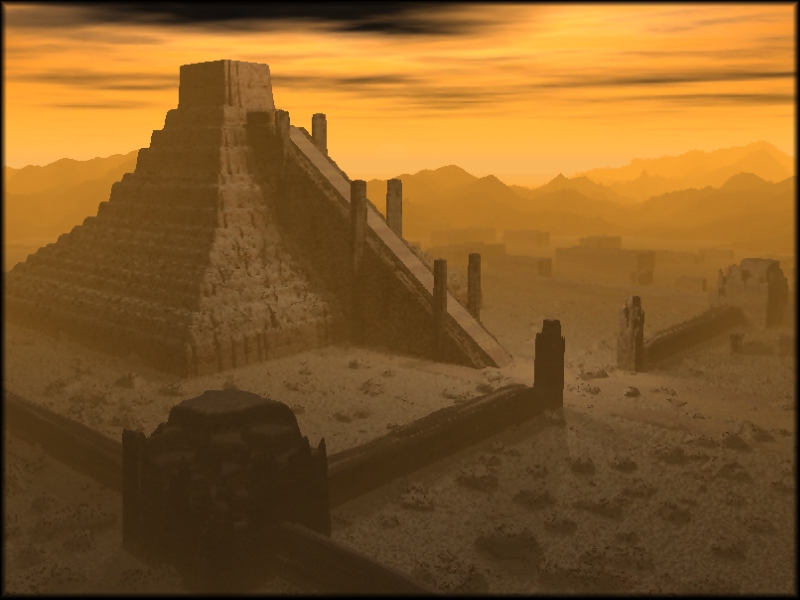
Part of my novel involves ancient Sumer. Because ancient Sumer is now Iraq, it’s safe to say I haven’t been there. I researched the buildings, the people, the culture, but the day-to-day sensations cannot be researched. Here, on the eastern shore of Maryland, I know that on a winter day it will be anywhere from chilly to cold. I know that the sun shines most days and when it doesn’t, the usual precipitation is rain, not snow. I know that when the snow does fall, it sticks to the grass, but not usually the road. I know when it does stick, the next day will most likely be warm enough so that by the afternoon the only evidence that remains of the snow is in plow-blackened mounds by the curb. I know that in five months, it will be in the upper eighties. I know that walking to the car will make me breathless from the moisture-thick air and that my hair will start forming weird little kinks. I know the asphalt will blast arid heat up my legs, but my skin will still be tacky. I know this because I live it every day. What I don’t know — and can’t feel from a book or Internet site — is what midday in Iraq feels like.

All of this leads me back to the original question; is an educated guess enough where setting is involved? Or am I cheating the reader of something, no matter how small it may be?

Image borrowed with thanks from Dawnrazor


Just Because

A recent posting by SQT, subsequent comments by Stewart about the market saturation of zombies, and a coincidental link from my friend “X” all led me to believe this was exactly what this blog needs right now.

Don’t tell me you’re not doing the claw thing at your desk; I know you are.


Did you say you like the occult?


There’s been a lot of buzz on the blogs I frequent about writers helping — or, more specifically, not helping — one another. I’ve harbored the same concern for quite a while, and I’ve done my fair share of complaining. After deep consideration and a brief consult with the genius of Benjamin Hoff (The Tao of Pooh) and his insight into the “Confusionist, Desiccated Scholar,” I’ve decided to stop worrying about those who wish to horde information as if it were the rightful property of only a select few and move on. In short, I’m shutting up and putting up.

Below is a list of sites I encountered during my research into occult and magical studies for this novel. There used to be more, but a good number of the links have drifted into oblivion since I began this collection over three years ago. Others were lost with a hard drive crash last summer.

I hope one or more of them will help one or more of you find that extra something to curl the toes of your readers. To those of you who don’t write fantasy, horror or any other genre in the paranormal/toe-curling family, I’m sorry I don’t have anything for you, other than a list of fascinating reads that just might make you want to come over to the dark side.

*****************

University of Virginia’s Religious Movement Project — Covers topics on religions across the United States, with an interesting section on cults.

About.com’s Book of Shadows — Although About is a pretty common site, I’ve included this direct link to basic principles of Wicca that’s broken down into smaller sections on things like altar appearance and symbols.

National Occult Research Association — Dark Magic, paganism… Something for everyone.

Archives of Western Esoterica — The mother of all occult sites! All the archaic magical knowledge you can handle. Make sure you check out the Key of Solomon and the Lemegeton (the Lesser Key).

The Catholic Encyclopedia on Demonology — About demons, by the Catholic Church

Ontario Consultants on Religious Tolerance — Contains a good overview of many different beliefs, including Wicca and Vodun.

Waning Moon — Information on the Dark Pagan path. The bulk of the information on this site seems to be missing right now, but the link page gives a good selection of links to other sites (a few of which I’ve mentioned here).

Hermetic Fellowship’s Virtual Library — More esoteric documents.

The Alchemy Website — All things alchemical.

Monstrous.com — You guessed it, all things monster. I’m a fan of the demon section.

Sacred Texts Online — Bring your wading boots and lots of patience; it’s a huge site with a sea of religious info.

God Checker — Not sure if you’re dealing with Ninhursag or Inanna? Check!

The Serene Dragon — All things dragon.

Death and Dementia — I’ve only been to the paranormal anomalies section, so I can’t account for what you might find elsewhere on this site.

Ex Oblivion — The site’s owner has a collection of personal essays on a host of dark beliefs/practices.

Traditional Religion in Africa: The Voudon Phenomenon in Benin — Article by Barthelemy Zinzindhohoue.

DMOZ Open Directory Project — This link connects to their religion and spirituality directory.
Their Vodun
section is quite large.

Maryland Paranormal Research Society — Mostly pertains to Maryland stuff, but still an interesting site.

**************

Maybe next week we’ll talk books.


Being Not


I thought I was done writing Not chapters. But, during my editing today, I decided she needed one last hurrah. I haven’t really talked about her, or any of my characters, really (aside from Resonance’s/Spider’s blog on MySpace). She’s a prisoner of a dark magickian named Arhreton who has used her since infancy to complete monthly rituals that will bring him the power of the legendary warrior, the Middu. He tortures and torments her not only for his magickal gain, but also because the Middu is everything, and she is — Not.

Not can’t speak, has no capacity for real human interaction and is a victim in every sense of the word. Her only saving grace is the ability to bi-locate — to transport her consciousness to another body in ancient Sumer, where Eight gods once ruled over humans. The interactions between the warring deities are viewed through her skewed perspective.

Despite the disturbing research I had to do on feral children (the photo above is of Victor, the wild boy of Aveyron), and the horrific conditions of her upbringing, she surprised me by being a fun character to write. With my other characters — even Resonance (sorry, Res) — I’m easily distracted. I get irritated because the words don’t readily flow like they do with her. I wander to the refrigerator, which is perilously close to my desk. I wander back and peck out a few more words. But with Not, I get lost. She’s tragic, funny, and sometimes fairly evil. Her thought processes waver between insightful and hopelessly jumbled. I always have to be on my toes when she’s around, because she’ll take me off on some wayward journey and once it starts, all I can do is go along, just to see where she leads me.

Not was never intended to be a point-of-view character. I thought I had enough going on with three POV’s. Then I realized if I wanted to explain the gods’ back-story without the main characters having to read about them from dusty texts, I’d have to have someone experiencing their past along with them. So Not became a major player and the story of the gods was sprinkled throughout the book with more lively (if somewhat muddled) interpretation of events provided by her.

The majority of the book had been written when I made this executive decision. I worried that it was the wrong choice, that I’d be spoiling an otherwise good book. Luckily for me it turned out not (small pun intended) to be the case. I feel she’s given this story a depth it previously lacked, and I hope that readers can, if not actually like her, find her interesting. If it isn’t too pretentious to say — I do.


Your Only Friend, The End.


What makes a good ending? What makes a great ending? What is that one thing that takes a breathless reader through those last twenty pages before he puts the book down with a sigh, feeling like the journey was well worth it? What are the keys to forging a solid, leave-em-happy ending? Or, more specifically, what are the issues that make the actuality of that ending a pipe dream? I think I’ve come up with a few:

1) Predictability. No one wants to finish a book when its apparent by mid-point exactly where events are leading.

2) Impossibility. There can’t be some Deus ex Machina ending where the hero not only produces a hat out of thin air, but also waves it with a flourish and yanks out one, two, three little bunnies. The feeling of betrayal or of being had is not a good one with which to leave the readers.

3) Unsatisfactory. Here’s where the waters gray. Some may say a book is unsatisfactory unless everyone lives happily ever after. I think a book is unsatisfactory if everyone lives. Stephen King obviously thinks a story is unsatisfactory unless there’s nary a person left standing (or, if there is, that person is covered in blood, missing a limb or two, and is mentally scarred forevermore). In this arena, research has to be a key element — truly knowing one’s audience and understanding what they feel to be a fitting conclusion.

4) The bane of my new writing existence (and probably the most culpable of the offenders out there) — Flatness. There’s nothing really wrong with an ending of this type; it builds to a climax, resolves the conflict and then ties up all the loose ends. It’s technically on the mark, but somehow doesn’t deliver the grand finale readers crave. There’s no gritting of teeth or twitching of anxious fingers as eyes sweep the last few paragraphs of the page in the hurry to get to the next. There’s no racing of minds to figure out just how all will be resolved. The book simply ends. What remains is a feeling of lacking, that we’ve been cheated of that ending — The ending.

Unfortunately, I could probably list more books that fall under the one of the above categories than those that don’t. Which brings me to the five hundred dollar question, Alex — What makes me any different? Is it the fact that I’ve already mapped the pitfalls? Or that I’m overly conscious of the issues that could send me into a downward spiral of blandness? I’m not so sure. Despite my awareness, I could very well find myself in the exact same position. In fact, I have. The whole reason for rewriting the final chapters of Resonance is because the first ending just… Ended. Even with my plot twist, there was little need to break out the pins and needles.

I’d like to hear from you seasoned writers out there; you who have tread the uncomfortable path of “wrapping up.” How have you managed your endings? And, did they ever shine as brightly as your mind pictured them? And, for the newbies like me, how are you managing? Is the resolution as torturous for you as it has become for me? Let me know. I’m curious to find out.


My MySpace Blog Rant


I know I said I’d never have recycled content, but the talented (and rightfully defiant of the the dodgy and mercurial rules passed down from the Writing Powers That Be) Kate has requested I transfer this post from my blog on MySpace to here. Never one to turn down an appeal — especially one that makes me feel all kinds of special — here it is.
**************

Are You a Real Writer?

No, this isn’t some Internet quiz that will tell you if you’re on the right track or not. Sorry to disappoint, but odds are, if you need a quiz to tell you, then you’re probably not.

I read a few books on the craft of writing when I first started this project. In many ways, they proved invaluable. Nonetheless, I’ve started to shy away from them. Each time I get into one, I find myself in a spiral of intimidation. “What’s your theme? What are recurring images in your work?” The list of questions goes on and on, until I feel like a kindergartener with a Crayola-scrawled piece of paper in an interrogation room. The light on me keeps getting brighter, the interviewer more antagonistic, and I shrink down in my chair, holding up my little paper like a shield and say, “But — see what I did? Pretty.”

The investigator lets me go and I scurry away, self-doubt dogging my heels as if it were my shadow: What if I don’t have a theme? Am I filling 200,000 words worth of pages with absolutely nothing? Do I even know anything close to what the hell I’m doing? It may be what all new writers go through, I don’t know. All I’m certain of is the plague of uncertainty that is left in the wake.

I just picked up another one of those books, one recommended to me a while back but had been banished to the dustiest corner of my shelf for the reasons stated above. While revising, I decided I indeed needed some guidance and set about reading through this one, hoping for some sort of validation or direction. Instead, I got the doubt-monster for company.

On Saturday night I went out with a group of friends. We were in one of the Ocean City local restaurant/bars — one of the few that doesn’t shut down when tourist season ends. The conversations went all over the place, but, finally, the subject turned to my writing. Now, I don’t usually talk about the novel. First off, I just don’t see any natural way to insert the topics I cover in any standard conversation (“Hey, did you guys know that in dark magic poison can be made extra potent by straining it through the hair of a redhead?”). Secondly, I get nervous they’ll all catch on to the fact I have no idea what I’m talking about. So, I end up replying to their queries in a vague manner, like, “Oh, it’s going okay.”

For whatever reason (maybe the thick, brain-clouding haze of cigarette smoke, or the trauma from a three hundred pound man toppling off his barstool and nearly taking me out with him), I felt compelled to corner one of my poor friends, subsequently launching into a hour-long tirade about the story and it’s plot twists and turns. During that time I realized two things: 1) My friend is an extremely patient person, and 2) I DO have a handle on this novel.

I started talking about Resonance and her plethora of issues and I realized — hey, I actually go somewhere with this thing. I went on and on about acceptance, the development of humanity in the absence of all that can be defined as human, and the struggle for a sense of self. I talked for so long my lips started to stick to my gums and my voice became hoarse. To my friend’s credit, her eyes never once glazed nor did she check her watch. She actually seemed — interested.

I guess this self-acceptance (that which I write so prolifically about in fictional terms) comes for me in stages. Despite my lack of formal training and despite my seeming inability to play “name that theme” in the early stages of my work, I am a real writer. I’ve got the tools, and I’ve just shown myself I can use them. It’s a nice feeling — like a paternal pat on the head from The Beyond, a reassurance I’m in the right place at the right time, and definitely doing an okay job.