
Monthly Archives: February 2007

"Are you bothered by smoke from someone else’s cigarette or cigar?"


When I was a kid, everyone smoked. I’m young enough not to recall people smoking in movie theaters or supermarkets, but I do remember the tall canisters at the entrance to every department store — those alluring mini-sandboxes my mom would always utilize, but never let me play in.

Back then, ashtrays were art. The best were glass and had a matching tabletop lighter, so all of ones’ friends could light up in style. The coffee table ashtrays were made for the cigarette to casually rest, perfectly balanced within one of the deep, wide V’s ringing it. The cheap plastic ones (more often seen about my house because of the convenient portability) had those narrow channels my mom would — on the rarest of occasions — be forced to crumple and bend her cigarette into. It would tightly hold the burning remains hostage while she attended some urgent matter (usually involving me, and yelling). More often than not, though, those little depressions remained unmarred. I never saw a party where a cluster of my parents’ friends gathered around the ashtray, propping their individual vices in the slots provided. Instead, they clutched them (in all the various styles that gave a spark of individuality to a common habit), or swung them about as they spoke, or forced them to share space in their hand with a drink.

It seems to me smokers like to be close to their smoke. Never once did I see my grandmother put hers down. Not even for a photo. Throughout our family album, she’s there in her chair, one leg slung over the other, right elbow on the armrest. Her hand is lifted casually to the sky, cigarette nestled between her fingers like a miniature, glowing extension of her very being.

All of this reminiscing brings me back to the main inspiration for this bit of fluff — the Smokeless Ashtray by Ronco. For those who are too young to know of this invention, it was the Yuletide equivalent of the Chia Pet — marketed heavily once Santa made his way along the Macy’s parade route, only to disappear from television ads the minute the Ball fell in Times Square. The Smokeless Ashtray’s intended purpose is clear in its title; a canister positioned over an ashtray that sucked the smoke up into itself, purportedly relieving everyone else in the room from the negative effects. But, unless the smoker stored his cigarette in the ashtray after each puff (which — by my grand, worldwide observations noted above — is doubtful), it couldn’t have possibly done much to stop a roomful of people from suffering from the effects of someone’s smoke.

Obviously, the most smoke escapes when a smoker exhales. The rest of the time, it’s just a tiny little chimney sending curls of smoke straight up into the air. In order for the smokeless ashtray theory to be properly implemented, the smoke would have to be curtailed when it’s being put out at the highest volume. And here is where a brilliant idea is born — The Smoker’s Helmet. An umbrella-like creation affixed to the head of the smoker that would pull up the exhaled smoke, sucking it into the top of the helmet where it would be disposed of via the Smokeless Ashtray method.

If people could be convinced the Smoker’s Helmet was fashionable, the glorious heyday of my youth could be restored. There would be smoking in the malls, in bars and in restaurants. Moviegoers could again enjoy lighting up in a theater (although there would have to be a Smoker’s Helmet section, because sitting behind one would be like sitting behind Darth Vader). The decorative ashtray could return from its exile and once again grace coffee tables everywhere. And I might just get a chance to play in that sandbox, after all.

http://www.ifilm.com/efp

************

Many thanks to Squeaks for making me laugh hard enough to want to write about the Smoker’s Helmet.


"To Sleep, Perchance to Dream…"


My mortal coil is a Slinky. It starts at my feet and winds up and up, so tightly wrapped around me that it would take a great deal of doing to shuffle it off. It’s not that I fear the state of death, or what lies beyond, because when I reach that point it will no longer matter. The afterlife will do what it wills — be it roasting my sinning butt in an eternal all-you-can-eat Avery barbeque, or allowing me to pass into floaty happiness as a tiny part of the greater One. And even if there is no sense beyond that which the living body provides, it still won’t matter to me once I’m dead. After all, the insensate form has no means by which to mourn itself. No, I worry more about the single second right before all goes blank (or all is revealed) when I’ll recognize that one moment as the last for me — at least the last as I currently recognize moments.

I’ve been plagued the entirety of my adult life with what I call my Hamlet complex; my considerable concern with becoming whatever it is I will become in the end. Equaling this is my concern for being myself until the end of time.

I guess what I’m saying is, I fear eternity.

The idea of never-ending sameness strikes a chord of horror within me. As much as I don’t relish the idea of being dead forever, I sure as hell don’t want to be alive forever. If I had the choice, I think I’d prefer to be dead a while, then wake up and live a while, going back and forth in that manner until time itself passes into oblivion. I’ve considered the hope of reincarnation, but the thought of not recalling who I am at this very moment bothers me (then again, if I’ve already reincarnated into this particular life, the process hasn’t done much to me in the way of trauma). I suppose it all goes back to that instant when I die. At that moment, when I’m still Avery, I suspect relinquishing my memories to become another person entirely would be an unwelcome idea. But, once I’d crossed over (or up, or down, or whatever direction I’m to take) it might not seem like such a bad deal.

These issues — as with countless writers before me — have wound their way into my book, snaking around the storyline much as my mortal Slinky coil has encompassed me. I’ve flung death onto pages of text, infusing this novel with themes of mortality and resurrection. Mirroring my trepidation of a future without change, Resonance spends some time in a version of the Norse Hel, a icy wasteland that stretches without variation into eternity. My necromancers speak of a cycle of life, death and rebirth — but also with options for those who choose not to inhabit a living shell again. There’s no punishment or consequence, only personal choice. The dead are allowed to select how they want their afterlife to play out. They’re given back their freewill — something ultimately taken from them at birth when they were not consulted about the matter of their eventual demise. And so, I’ve gone on, attempting to placate myself with my own fancies, soothing my inner uncertainties within my characters’ spirituality.

Has this exercise in self-trickery lessened my Hamlet complex? Not really. But, at least I’ve made some use of useless qualms. We writers are lucky; we have the will and ability to forge entire worlds of our own choosing. We can create people, and then pass onto them the hopes we don’t dare hold for ourselves. We are granted the range to give vent to our frustrations and fears, and then to conceal them all under the pretty guise of art. Do you know what the best part is? It’s cheaper than therapy.

******************
6:47pm

I was given a link to this video by my friend X, who is, as always, ever sensitive to my fits of despair:


How much is enough?


Can we trick our readers into thinking they’re in a place that we ourselves have never been? Can we fool them enough to make them believe our characters actually dwell where we say they do? How important is it for us to put ourselves wholly into their shoes before setting fingers to the keyboard?

This topic arises after reading about Sidney Sheldon’s passing. I have to say I’ve never read any of his work, and didn’t even know he was the creator of “I Dream of Jeanie.” The article I read mentioned his habit of traveling to the exotic locales in which he placed his characters, and how he liked to immerse himself in that aspect of the world he was recreating on the page. I began to wonder if a reader could tell if a writer has never been to the location he or she is writing about. Could two writers — one who has been to say, Hawaii, and another who has only done extensive library research on the islands — each write a story and then present it to readers and have them guess which one actually traveled there? Could the readers tell the difference? If so, would it matter to them?

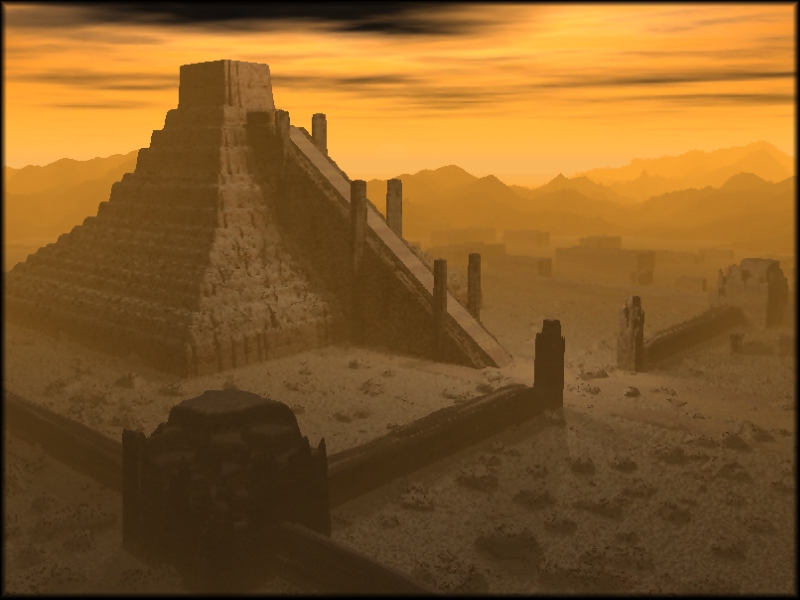
Part of my novel involves ancient Sumer. Because ancient Sumer is now Iraq, it’s safe to say I haven’t been there. I researched the buildings, the people, the culture, but the day-to-day sensations cannot be researched. Here, on the eastern shore of Maryland, I know that on a winter day it will be anywhere from chilly to cold. I know that the sun shines most days and when it doesn’t, the usual precipitation is rain, not snow. I know that when the snow does fall, it sticks to the grass, but not usually the road. I know when it does stick, the next day will most likely be warm enough so that by the afternoon the only evidence that remains of the snow is in plow-blackened mounds by the curb. I know that in five months, it will be in the upper eighties. I know that walking to the car will make me breathless from the moisture-thick air and that my hair will start forming weird little kinks. I know the asphalt will blast arid heat up my legs, but my skin will still be tacky. I know this because I live it every day. What I don’t know — and can’t feel from a book or Internet site — is what midday in Iraq feels like.

All of this leads me back to the original question; is an educated guess enough where setting is involved? Or am I cheating the reader of something, no matter how small it may be?

Image borrowed with thanks from Dawnrazor